
Introduction
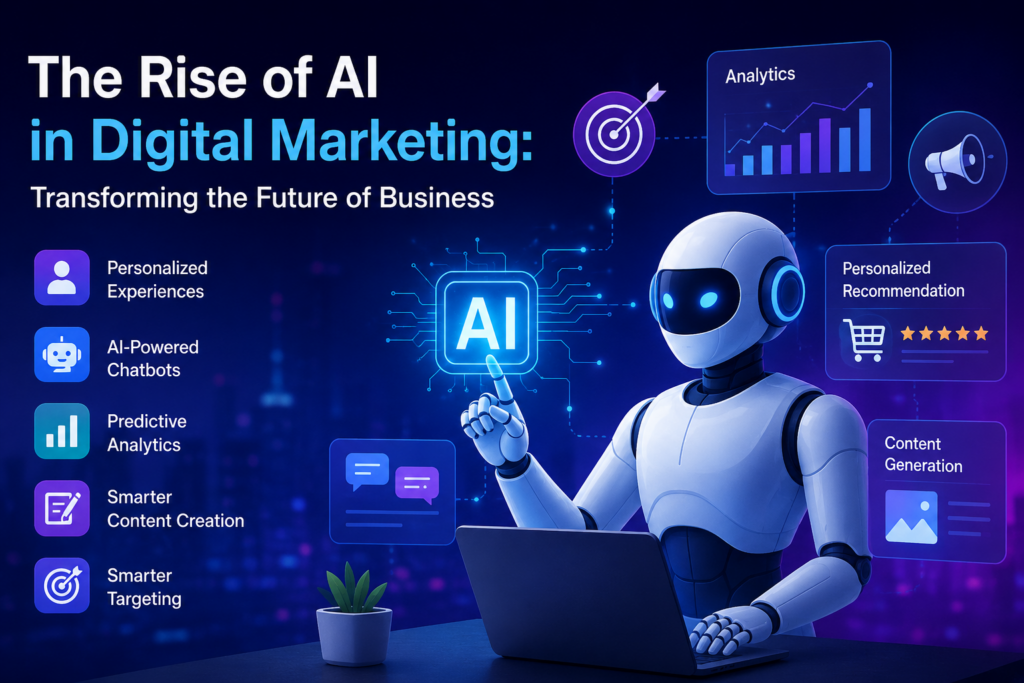
Artificial Intelligence (AI) is no longer a futuristic concept reserved for technology companies and science fiction movies. Instead, it has become a driving force behind many of the digital experiences consumers encounter every day. From personalized product recommendations and automated customer support to intelligent advertising and predictive analytics, AI is rapidly transforming the way businesses connect with their audiences.
As digital marketing becomes increasingly competitive, organizations are under constant pressure to deliver more relevant experiences while maximizing efficiency. Consequently, many brands are turning to AI-powered solutions to better understand customer behavior, streamline marketing operations, and improve campaign performance. By leveraging advanced technologies, businesses can make smarter decisions, respond more quickly to market changes, and create stronger customer relationships.
Furthermore, as consumer expectations continue to evolve, traditional marketing approaches are often no longer sufficient. Today’s audiences expect personalized interactions, immediate responses, and content that aligns with their specific interests. Therefore, AI has emerged as a valuable tool for meeting these expectations while helping businesses remain competitive in an ever-changing digital landscape.
Understanding AI’s Role in Digital Marketing
At its core, Artificial Intelligence refers to computer systems capable of performing tasks that typically require human intelligence. These tasks include learning from data, recognizing patterns, making predictions, and automating complex processes.
In the context of digital marketing, AI enables businesses to analyze vast amounts of information in a fraction of the time it would take a human team. As a result, marketers can gain deeper insights into customer preferences, purchasing behaviors, and emerging trends.
Moreover, AI-powered tools help eliminate much of the guesswork associated with traditional marketing strategies. Instead of relying solely on assumptions, businesses can make data-driven decisions that improve targeting, increase engagement, and enhance overall performance.
Delivering Personalized Customer Experiences
One of the most significant advantages of AI is its ability to create highly personalized experiences. Modern consumers are exposed to countless marketing messages every day, making relevance more important than ever.
Rather than presenting the same content to every user, AI can analyze browsing history, previous purchases, and online interactions to deliver tailored recommendations. For example, e-commerce websites often suggest products based on a customer’s past behavior, while streaming platforms recommend content aligned with individual viewing habits.
Additionally, personalized email campaigns have become far more effective with the help of AI. Instead of sending generic messages, businesses can customize content based on customer interests and engagement patterns. Consequently, these targeted communications often generate higher open rates, increased engagement, and improved conversion rates.
As personalization becomes a standard expectation among consumers, AI allows businesses to provide meaningful experiences at scale without sacrificing efficiency.
Enhancing Content Creation and Strategy
Content remains one of the most important elements of digital marketing. However, producing high-quality content consistently can be both time-consuming and resource-intensive.
Fortunately, AI is helping marketers streamline various aspects of the content creation process. For instance, AI-powered tools can assist with topic research, keyword analysis, content outlines, and performance optimization. This enables marketing teams to spend less time on repetitive tasks and more time focusing on creativity and strategy.
Furthermore, AI can identify content trends and audience preferences by analyzing large datasets. As a result, marketers gain valuable insights into the topics that resonate most with their target audience.
While human creativity continues to play an essential role, AI serves as a powerful assistant that enhances productivity and supports more informed content decisions.
Revolutionizing Customer Support Through Automation
Customer expectations have changed dramatically in recent years. Today, consumers expect quick responses and seamless interactions regardless of the time of day.
Consequently, AI-powered chatbots and virtual assistants have become increasingly popular among businesses seeking to improve customer service. These intelligent systems can answer frequently asked questions, assist with purchases, and provide support around the clock.
Moreover, automated customer service solutions help reduce response times while allowing support teams to focus on more complex inquiries. This not only improves operational efficiency but also enhances the overall customer experience.
As AI technology continues to advance, virtual assistants are becoming more sophisticated, enabling businesses to provide faster and more personalized support than ever before.
Improving Advertising Performance
Digital advertising has become increasingly data-driven, and AI is playing a central role in optimizing campaign performance.
Traditionally, marketers spent considerable time analyzing audience data, adjusting budgets, and refining targeting strategies. However, AI can now automate many of these processes while continuously learning from campaign performance.
For example, machine learning algorithms can identify high-performing audience segments, optimize bidding strategies, and determine the most effective times to display advertisements. Consequently, businesses can maximize their advertising budgets while achieving better results.
In addition, AI helps marketers create more relevant advertisements by analyzing user behavior and preferences. This level of precision often leads to higher engagement rates, improved click-through rates, and stronger returns on investment. Businesses can use AI to optimize email marketing campaigns, improve open rates, and deliver personalized customer experiences.
Predictive Analytics and Smarter Decision-Making
One of AI’s most powerful capabilities lies in predictive analytics. Rather than simply analyzing past performance, AI can forecast future outcomes based on historical data and behavioral patterns.
For instance, predictive analytics can help businesses identify potential customers, anticipate purchasing trends, and detect changes in consumer behavior before they become widespread.
Furthermore, these insights allow organizations to make proactive decisions rather than reactive ones. By recognizing opportunities and potential challenges early, marketers can adjust their strategies more effectively and allocate resources where they will have the greatest impact.
Consequently, predictive analytics provides businesses with a significant competitive advantage in today’s fast-paced digital environment.
Navigating Challenges and Ethical Considerations
Although AI offers numerous benefits, its adoption also presents certain challenges. As businesses collect and analyze increasing amounts of customer data, privacy and transparency have become important concerns.
Therefore, organizations must ensure that customer information is handled responsibly and in compliance with relevant regulations. Building trust requires maintaining transparency about how data is collected and used.
Additionally, while automation can improve efficiency, excessive reliance on AI may reduce the human element that many customers value. As a result, successful businesses strive to strike a balance between technological innovation and authentic human interaction.
By combining AI capabilities with creativity, empathy, and strategic thinking, organizations can maximize the benefits of technology while preserving meaningful customer relationships.
Conclusion
Artificial Intelligence is reshaping the digital marketing landscape in remarkable ways. From delivering personalized experiences and optimizing advertising campaigns to improving customer support and enhancing content strategies, AI is helping businesses operate more efficiently and effectively than ever before.
Moreover, as technology continues to evolve, its influence on digital marketing is expected to grow even further. Organizations that embrace AI-driven solutions today will be better equipped to adapt to changing consumer expectations and emerging market trends.
Ultimately, the future of digital marketing will not be defined solely by technology but by how businesses use that technology to create value for their customers. By combining innovation with human insight, brands can build stronger connections, deliver exceptional experiences, and achieve sustainable growth in the years ahead.